I spent eight years watching women stand in a dressing room under bad fluorescent lights and say the same thing in different ways: I want to look like I tried, but not like I tried too hard. That is the whole job of cute everyday outfits. They have to work for school pickup, a grocery run, a Zoom call, and the Tuesday when your kid spills yogurt on your sleeve before 8 a.m. You do not need a closet overhaul to get there. You need a few pieces that fit your body, hold up in the wash, and make sense with the life you actually live.
What Cute Everyday Outfits Really Need
Cute everyday outfits start with comfort that does not look lazy. I am talking about a tee that skims instead of clings, jeans with enough rise that you can sit down without hiking them up, and a shoe you can walk in from the parking lot to the pharmacy counter. Cotton, cotton-modal, ponte, and denim with a little stretch do a lot of heavy lifting. So does a neckline that sits flat and sleeves that do not bunch up under a jacket. Most women do not need more clothes. They need better proportions. That means one piece with structure, one piece with ease, and one piece that gives the whole outfit a little shape.
In fitting rooms, I hear some version of “I just need something easy” at least three times a day. Easy is fine. Easy can still look finished. A $14 tee from Old Navy, a $68 pair of straight-leg jeans, and a $55 cardigan from Lands’ End will beat a closet full of impulsive buys every time because those pieces work together. If you wear the jeans twice a week for a year, you are looking at about 100 wears, which makes the cost feel a lot smaller than the sticker shock at checkout.
The Three-Piece Formula That Saves You Time
The easiest path to cute everyday outfits is a three-piece formula: a base layer, a bottom, and a third thing. The base layer might be a ribbed tee, a knit tank, or a lightweight sweater. The bottom could be straight jeans, wide-leg pants, or a knit skirt that does not grab at the hips. The third thing is what keeps you from looking underdressed. Think denim jacket, cardigan, blazer, utility jacket, or even a long vest if that is your lane. When those three pieces play well together, you do not need a closet full of options. You need enough colors that cooperate. Navy, black, cream, olive, and medium denim are easy to mix and hard to mess up.
I had one client in Des Moines who swore she had “no style at all.” She actually had the right ingredients; they were just living in separate corners of her closet. We paired a cream knit tee, dark jeans, and a taupe cardigan with clean white sneakers, and suddenly she looked like a woman who had her life in order. Nothing fancy. Just good fit and a clear line from top to bottom. That is what people read as put together.
Shoes, Bags, and Layers Do More Than You Think
If your cute everyday outfits keep falling flat by 3 p.m., look at the shoes first. Worn-out sneakers, clunky boots, and flimsy flats can drag down a whole look faster than a bad haircut. A clean leather sneaker in white, beige, or black usually does the most work. New Balance, Dr. Scholl’s, Vionic, and Skechers all make everyday pairs that are built for walking and do not need special handling. Around $70 to $120 is a realistic range for something you will wear constantly. The same goes for a crossbody bag with a strap that stays on your shoulder, not one that slides off every five minutes.
Layers matter because Midwest weather loves a trick. You leave the house at 38 degrees, hit 61 by lunch, and end the day back in a wind that feels personal. A denim jacket, soft blazer, or cardigan lets you adjust without changing the whole outfit. I like a blazer when a woman needs more shape through the shoulders, and I like a cardigan when she wants softness without looking swallowed up. A good outer layer is the difference between “I threw this on” and “I know what I am doing.”

Five Outfits That Actually Work on a Tuesday
One outfit that never fails is dark straight jeans, a white tee, a tan cardigan, and white sneakers. Another is black ankle pants, a striped knit top, and loafers. If you want a little more polish, try a midi skirt with a tucked-in sweater and low-profile sneakers. On colder days, I reach for ponte pants, a long-sleeve tee, and a denim jacket. For casual Fridays, a shirt dress with sneakers does the job without making you think too hard. None of those looks require a special event. They are just cute everyday outfits that can survive carpool, work, and the checkout line at Target.
One thing I have learned from years in fitting rooms is that women often own the outfit, not the outfit formula. They have the pieces, but they do not combine them the same way twice. That is why repeating a good formula matters. When you find one look that feels like you, wear it in different fabrics and colors. The woman who gets complimented at the grocery store is usually not wearing a miracle piece. She is wearing a repeatable formula with decent shoes.
Where to Spend and Where to Save
Spend on the pieces that take a beating: jeans, bras, shoes, and the one jacket you grab all season. Save on tees, tanks, and casual knits, because those are easy to replace and easy to wash. I am perfectly happy with a $12 tee from Target if the neckline holds its shape and the fabric is not see-through. I am less happy with a cheap pair of jeans that twists after two washes. If you buy one $78 pair of jeans and wear them twice a week for a year, the math is better than buying three cheap pairs that annoy you every time you reach for them. That is not a luxury decision. That is a sanity decision.
For shoppers who like a simple route, stores like Gap, Old Navy, Target, and Lands’ End usually give you enough basics to build from without sending your budget into orbit. If you want fewer shopping trips, buy the best version of your everyday shoe first, then build around it. Shoes set the tone more often than people think.
A Small Closet Can Still Give You Options
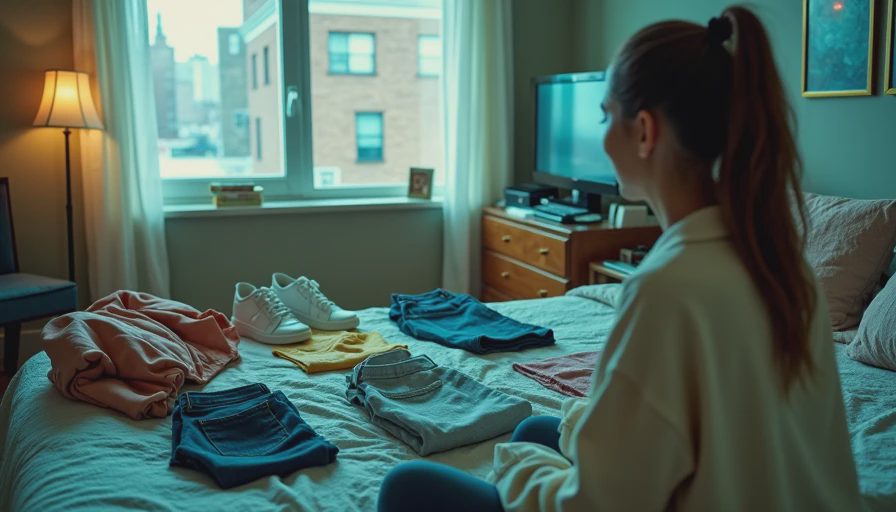
If you want a fast reset, pull out three bottoms, five tops, and two layers you already wear without fuss. Put them on the bed. Then pair every top with every bottom and write down the combinations that actually work. That little exercise usually exposes the problem fast. Sometimes it is not the number of clothes. Sometimes it is one pair of pants that fights every shirt you own, or a cardigan that is too short to do its job. Once you see the pattern, you can shop with a list instead of a feeling.
When a woman books me for a wardrobe consult, I am rarely building from scratch. Usually we are editing. We take out the pieces that make her tug, adjust, or bargain with the mirror, and we keep the ones that earn repeat wear. That is how cute everyday outfits get easier. Not by chasing trends. Not by buying ten new things at once. By choosing pieces that behave on your real Tuesday, in your real shoes, with your real schedule. Dressed for your real life.



No comments yet — be the first to share a thought.