Everyday work outfits should handle more than a desk and a conference call. They need to survive a chilly office, a school pickup, a grocery run, and the occasional coffee spill without making you feel like you got dressed in the dark. After eight years in Von Maur fitting rooms, I’ve learned that most women don’t need more clothes. They need a few dependable combinations that fit their bodies, budgets, and actual schedules.
The goal isn’t to look like a magazine editor. It’s to look like yourself on a good morning, with five minutes to spare. These are my favorite everyday work outfits for offices with a business-casual dress code, plus small adjustments for more formal workplaces.
Start with a reliable outfit formula
The easiest everyday work outfits follow a simple formula: one structured layer, one comfortable base, and one pair of shoes you can walk in. Try straight-leg ankle pants, a soft knit top, and a cropped cardigan or unlined blazer. The pants provide shape without requiring constant tugging, while the cardigan adds warmth when the thermostat is set to “meat locker.”
For a Midwestern closet, I like navy, charcoal, olive, camel, and denim-friendly cream. These colors mix without much thought. A $55 pair of machine-washable ponte pants can earn its place quickly if you wear them twice a week for a year. That’s roughly fifty cents per wear before laundry, which is a better bargain than a $180 pair of trousers that wrinkles on the drive to work.
Pay attention to fabric content. Ponte, cotton poplin, washable rayon blends, and lightweight merino usually behave better than thin polyester that clings to every layer underneath. Look for a waistband that sits flat when you sit down. If you’re holding your breath in the fitting room, the pants are not a success.
Three outfits that don’t require fresh inspiration
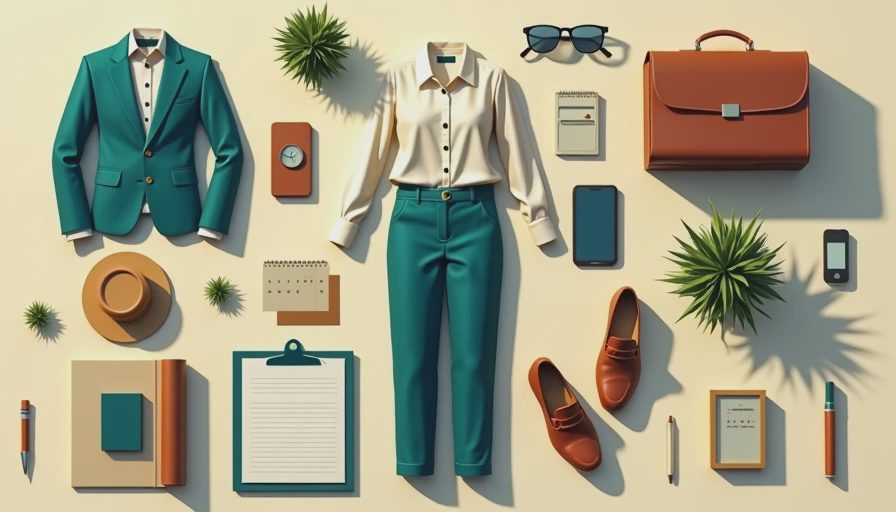
The first combination is dark straight-leg pants, a striped knit shirt, and a tan cardigan. Add loafers or clean leather sneakers if your workplace allows them. The stripe gives the outfit enough interest for a staff meeting, while the cardigan keeps it approachable for a regular Tuesday. This is one of the everyday work outfits I recommend when someone tells me she has “nothing to wear” but owns six cardigans.
The second is a knee-length knit dress with a denim jacket or soft blazer. Choose a dress that skims rather than grips and has enough fabric at the waist to let you sit comfortably. A navy dress can go with brown, black, or metallic accessories, so it earns more wears than a fussy print. In a more formal office, replace the denim jacket with a collarless blazer and add simple pumps.
The third is wide-leg trousers, a tucked-in shell, and a short sweater. This works especially well when you want your clothes to move instead of cling. The key is proportion: a voluminous trouser needs a top that ends at the waist or hip bone, not a long tunic that turns the whole outfit into one large rectangle. Try the full combination in front of a mirror before buying anything separately.
Fit checks from the three-way mirror
Here’s what I check before I tell anyone an item is coming home. Sit down. Raise both arms. Turn sideways. Walk ten steps. If the blouse pulls across the bust, size up and adjust the shoulder seam with a tailor if necessary. If the waistband rolls, try a different rise instead of automatically choosing a larger size. Clothing sizes are inconsistent; your body is not failing a test.
Sleeves matter more than people think. A sleeve ending at the narrowest part of your wrist makes a sweater look intentional, while one ending halfway down the hand can make every jacket feel borrowed. For pants, the hem should match the shoe you will actually wear. An ankle pant meant for flats may look oddly short with boots, and a boot-cut hem can drag through slush if it isn’t altered.
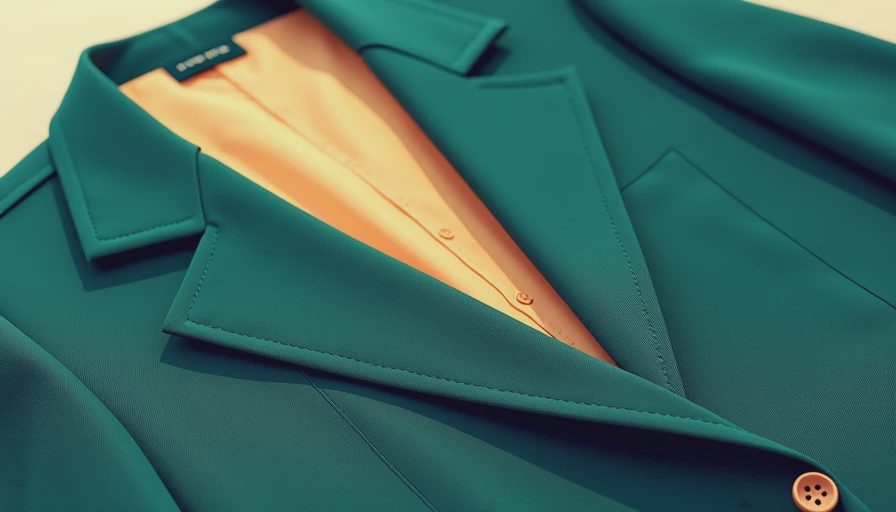
A woman once came into my fitting room with four blazers and a tired expression. Every one had strong shoulders and tight sleeves. We found an unlined knit jacket for $79 with a little stretch. She wore it to a parent-teacher conference, then told me she could drive without feeling trapped. That was the win—not a smaller size or a dramatic makeover, just a jacket that let her move.
Spend money where your outfit works hardest
For everyday work outfits, spend first on the pieces that touch your body or carry the visual weight of the look. Pants, bras, supportive shoes, and a coat deserve careful fitting. Save on simple shells, seasonal colors, and accessories that can be replaced when your taste changes.
A practical starting budget might be $60 to $110 for pants, $25 to $60 for knit tops, $70 to $140 for a washable blazer, and $60 to $120 for everyday shoes. You don’t need to buy everything at once. Add one dependable bottom, one top, and one layer each month. Within a season, you’ll have enough combinations to stop relying on emergency laundry.
Brands such as Lands’ End, Talbots, Old Navy, Universal Standard, JCPenney, and department-store house labels cover different price points and size ranges. I’m not loyal to a label just because it has a nice catalog. I’m loyal to fabric that survives washing, seams that lie flat, and a garment that still looks useful after its third wear.
Make your closet do the morning thinking
Hang complete everyday work outfits together for one week. Put the pants, top, layer, and shoes in the same section of the closet. Take a quick phone photo when a combination works. This creates a personal lookbook made from your real proportions and real wardrobe, not a Pinterest board built around clothes you don’t own.
Keep a small backup kit at work: stain remover, a lint roller, safety pins, deodorant wipes, and a pair of simple earrings. In winter, add a spare pair of tights or socks. These inexpensive items solve the problems that make an otherwise good outfit feel ruined by 10 a.m.
When you shop, bring the shoes and bra you plan to wear with the garment. Try sitting, bending, and reaching rather than standing stiffly under fitting-room lights. If the item requires special underwear, hand washing, or constant adjusting, calculate that effort as part of the price. A $35 top worn twice is not cheaper than a $70 top worn twenty times.
A five-minute plan for Monday morning
On Sunday evening, check the weather and choose one base color. Pull one bottom, two possible tops, and one layer. Try both tops before deciding. If one bunches, gaps, or needs ironing you will resent, put it back immediately. Add shoes that match the day’s walking and a bag large enough for your essentials.
For a presentation, choose a blazer, quiet print, and polished shoe. For a normal office day, soften the look with a cardigan or knit jacket. For a day that includes errands, start with comfortable pants and switch only the shoes or layer if needed. That is the magic of useful everyday work outfits: they can move with your life instead of demanding a separate costume for every appointment.
You deserve clothes that cooperate. Build slowly, notice what you actually wear, and stop buying pieces that only work in an imaginary version of your week. Dressed for your real life.

No comments yet — be the first to share a thought.