A closet audit spreadsheet is the fastest way I know to stop staring at a stuffed closet and saying, "I have nothing to wear." I have watched women spend an hour flipping hangers, then grab the same three tops because the rest of the rack is a guilt museum. The spreadsheet does not fix your style by magic. It does something better. It shows you what you own, what you wear, what costs too much to keep ignoring, and what needs to leave so the good pieces can breathe. If your mornings feel rushed, your laundry room is always one step from chaos, and your budget cannot handle another random Target run, this is a smart place to start.
Why the paper pile never tells the full story
A closet audit spreadsheet beats the classic floor-pile method because it gives you a clean record instead of a mood. The pile on your bed can tell you what annoys you in that one moment. The spreadsheet tells you patterns. Maybe you own six black cardigans, but only two fit over your shoulders without tugging. Maybe the jeans that cost $88 at Gap have been worn 40 times, while the $24 pair from Old Navy pinches after lunch. That is useful information.
When I worked fitting rooms in Des Moines, the biggest surprise was not that women bought the wrong size. It was that they kept the wrong pieces because they had no system. A sweater gets saved because it was expensive, not because it works. A dress gets donated because it feels fussy, not because it is actually bad. The spreadsheet clears out the noise and lets you make decisions based on wear, fit, fabric, and repair cost. That is how you turn a messy closet into a working one.
Build the columns that matter
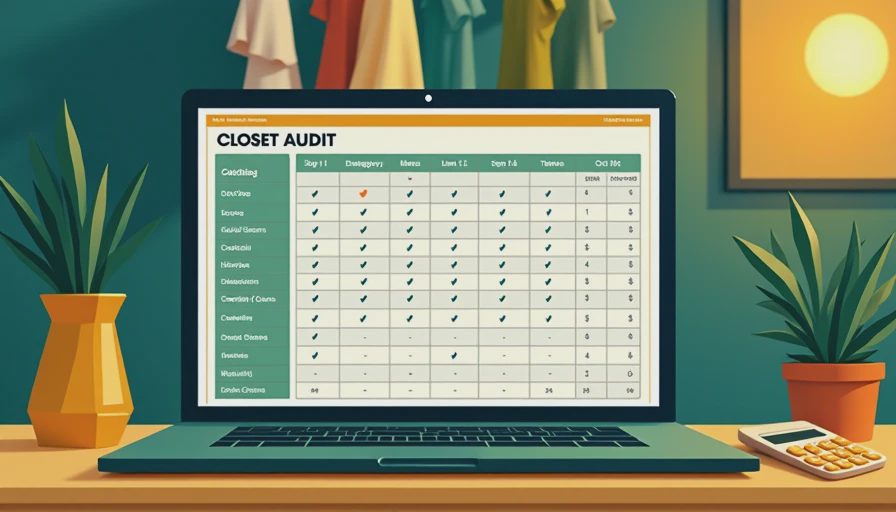
Do not make this fancier than it needs to be. Open Google Sheets, Excel, or even a Notes app table if that is what you will actually use. Your columns should answer a few plain questions: item name, category, color, season, fit, condition, last worn, and action. If you want one more column, add cost and approximate cost per wear. That last number can be humbling in a good way. A $120 blazer worn 30 times costs $4 a wear. A $40 blouse worn once and hated costs $40 a wear. That math gets honest fast.
A good closet audit spreadsheet also makes room for reality. Some items need tailoring, not tossing. A $15 hem on trousers is often smarter than replacing the whole pair. A blouse with one missing button is a five-minute fix, not a moral failing. I like to add a short notes column for phrases like "needs steam," "itchy fabric," or "wears out in carpool line." Those tiny details matter more than a vague yes or no.
Sort by the life you live now, not the one you planned five years ago
This is where people get stuck, because clothes carry memory. The blazer from your old job. The dress from a wedding that was somehow both expensive and uncomfortable. The jeans you bought before the weight change, after the weight change, or during the month you were sure you were going to start jogging. A closet audit spreadsheet helps you separate sentiment from function without acting like a robot.
I tell women to sort items into four buckets. Wear now, tailor or repair, seasonal hold, and donate or resell. If a piece does not fit your body, your calendar, or your laundry routine, it does not belong in the main closet. That does not mean it is bad. It just means it is not earning its space. This is also where you should be ruthless about duplicates. Three nearly identical gray tees do not make you more stylish. They make it harder to find the one that actually feels good.
One client in her 40s had eleven pairs of black pants and only two she could sit in comfortably all day. We put the rest into a donation box, and suddenly she could see the difference between work pants, church pants, and the pair she kept for travel days. That clarity is worth more than a closet full of maybe.
A weekend plan that does not eat your whole life
You do not need a magazine-worthy reset day. You need one Saturday, a trash bag, a laundry basket, and enough coffee to stay patient. Start with tops, then bottoms, then dresses, then outerwear. If you try to do shoes, purses, and scarves all at once, you will quit and order takeout instead.
This is the rhythm I recommend. First, pull everything out of one category. Second, make fast yes/no decisions based on fit and function. Third, note anything that needs cleaning, tailoring, or replacement in the spreadsheet before it disappears back into the closet. Fourth, return only the keepers to the rod in a way that makes sense to your brain. I like like-with-like and darks together because busy mornings need less guesswork.
The nice thing about a closet audit spreadsheet is that it gives you a record for the next season. When spring arrives, you are not starting from zero. You already know which sweaters pilled, which skirts were ignored, and which brands actually behaved after repeated washing. That saves time and money the second time around.

What to do after the audit is done
Once the sorting is finished, the spreadsheet becomes your shopping guardrail. Before you buy another cardigan, look at the gaps. If you already own three black cardigans and zero polished knit tops, that is where the money should go. If you wear one pair of straight-leg jeans twice a week, you do not need a closet full of experiment denim. You need a backup pair in the same cut, or a tailor who knows what they are doing.
This is also the place to set a simple replacement budget. I usually tell women to keep a short list of essentials and price ranges: a better white tee for $18 to $35, a day-to-night sweater for $40 to $80, a good pair of work pants for $60 to $120, depending on fabric and fit. Those numbers are not glamorous. They are useful. And useful wins on a Tuesday.
A closet audit spreadsheet is not about becoming someone else. It is about seeing your real life clearly enough to dress for it. If your closet has been making you late, frustrated, or weirdly guilty every time you open the door, start here. Clear one section, write down what you learn, and let the data do some of the heavy lifting. Dressed for your real life.



No comments yet — be the first to share a thought.