Everyday casual outfits are not about looking styled by an algorithm. They’re about getting dressed at 7:10 a.m. when somebody needs a permission slip, the dog has tracked in mud, and you still have to answer a work email before lunch. In my fitting room days at Von Maur, the women who felt best usually weren’t wearing the newest thing. They were wearing jeans that sat where they wanted them to, a tee that did not twist after one wash, and shoes they could walk in without planning their escape route. That is the goal here: real clothes that make a real Tuesday easier.
Start with the jeans that earn their keep
The best everyday casual outfits usually start with one pair of jeans you trust. Not the pair you keep tugging at. Not the pair that looks cute on a hanger and turns argumentative after brunch. I like a straight leg or a gentle slim-straight with a mid rise, because that shape works with sneakers, loafers, ankle boots, and the long cardigans women actually wear in the Midwest when the weather changes every four hours.
If you have been living in leggings because jeans feel like a fight, try a softer denim with a little stretch and a waistband that sits flat when you sit down. Levi’s, Gap, Lee, and Old Navy all make versions in the $40 to $90 range, and you do not need the most expensive pair to get the job done. You need the pair that stays put at the waist, skims the thigh, and does not bag out by dinner. That is where the money goes further.
Pick fabrics that survive a real week
The second rule for everyday casual outfits is fabric. Cotton tees are fine, but not every cotton tee is built the same. Some get thin at the collar, some twist after two washes, and some turn into lint magnets by Thursday. I like cotton with a little modal or spandex when a shirt needs to hold its shape, and I like ponte knit when someone wants pants that feel calmer than denim but still look pulled together.
A $24 tee that looks tired after three washes is not cheap. It is expensive in disguise. The same goes for cardigans that pill before fall really starts or sweaters that stretch at the elbows the first time you wear them to a school concert. Lands’ End, J.Crew Factory, Target, and Uniqlo all have good basics if you pay attention to fabric weight and not just the color. Hold the shirt up to the light. If it looks sheer in the dressing room, it will be worse after the first laundry day.
Build a three-piece formula you can repeat
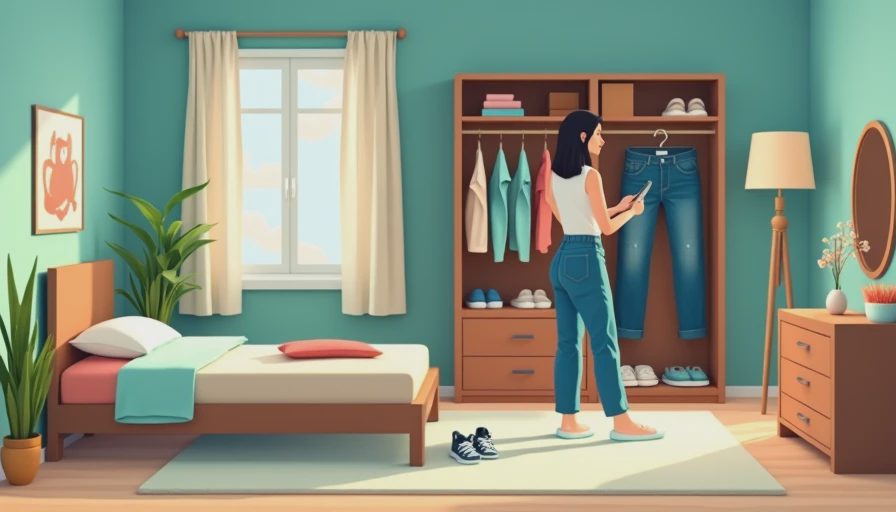
The smartest everyday casual outfits are usually built from the same simple formula over and over. One base piece, one layer, one shoe that can handle a parking lot. That might mean a white tee, straight-leg jeans, and a denim jacket. Or a ribbed tank, relaxed chinos, and a soft button-down worn open like a jacket. Or a fine-gauge sweater, black jeans, and clean sneakers. The pieces change, but the structure stays steady.
This is where women save time and money. When you already know what your best combinations look like, you stop buying random tops that have no friends in your closet. I had one client who kept buying bright print blouses because they looked cheerful on the rack. None of them worked with her pants, so they lived in the bag with the tags still on. We swapped that habit for three neutral tops, one striped shirt, and a charcoal cardigan, and suddenly she had a week of outfits without adding a single extra hanger.
Shoes and bags do more than people admit
People love to obsess over jeans and ignore shoes, but shoes can save or sink the whole outfit. If you are walking kids into school, running into Target, and crossing a wet grocery parking lot, you need shoes that are clean, stable, and not precious. White sneakers, loafers, low Chelsea boots, and simple slip-ons carry a lot of weight in everyday casual outfits because they work with almost everything and do not require a pep talk.
Bags matter too. A crossbody with a zipper is easier than a tiny shoulder bag that slides off every time you bend down. For a lot of women, the best bag is not the cutest one in the store. It is the one with a spot for your phone, keys, lip balm, receipt, and the random rock your six-year-old hands you at the park. If the bag is working, your outfit feels calmer. That counts.
A $300 shopping plan that leaves room to breathe
For everyday casual outfits, I tell women to buy the first pair of jeans that fits, not the first pair that is cheap. After that, spend where you will feel the difference every week. A realistic $300 plan could look like this: $70 for jeans, $30 for a better tee, $50 for a cardigan or overshirt, $80 for sneakers on sale, and the rest for a belt or bag that keeps the whole thing honest.
If you shop carefully, that budget can go farther than people think. I have seen a $58 cardigan from a mall brand worn twice a week from October through March, which brings the cost per wear down fast. I have also seen a $19 top worn twice because it shrank, pilled, and made the wearer mad every time she touched it. The cheaper item was the expensive one.
Clean out the closet before you buy another thing
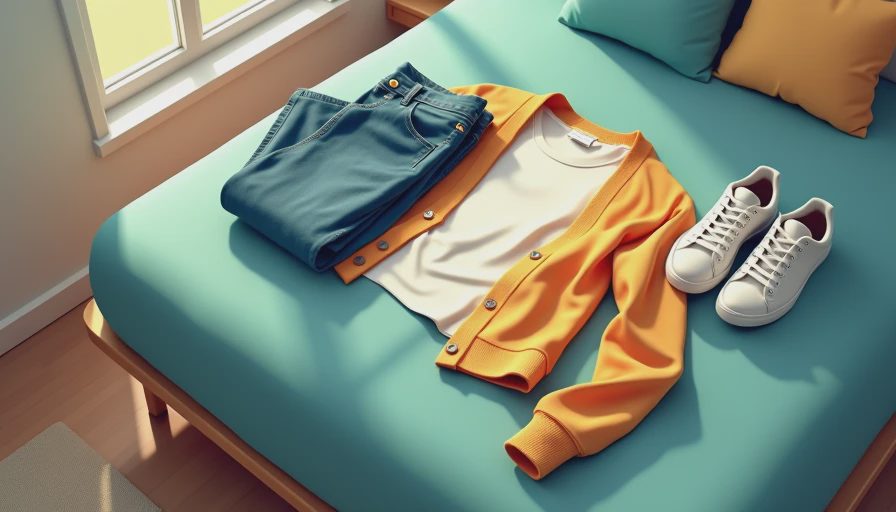
Before you add more clothes, pull the pieces you already wear onto one bed or one chair. Keep the jeans that fit, the tees that wash well, the sweater that never itches, and the shoes you can stand in for a full grocery run. Move anything that needs tailoring into a separate pile. If a hem is wrong, fix the hem. If the shoulders are off, let it go. That one decision saves more money than a new shopping spree.
Then make three outfit formulas and write them down if you need to. One for errands, one for casual workdays, and one for nights when you are too tired to think. That little bit of structure is what turns a closet full of almosts into everyday casual outfits that actually get worn. You do not need a wardrobe overhaul. You need repeatable clothes, a few honest basics, and the nerve to stop buying what never fits your life.
Dressed for your real life.


No comments yet — be the first to share a thought.