Most women do not need a new personality in their closet. They need clothes that survive a carpool line, a grocery run, a workday, and a last-minute stop at the library without making them feel underdressed or overdressed. When women ask me for everyday outfits for women, they usually mean one thing: help me look put-together without turning getting dressed into a project. That is a fair ask. In my fitting room days at Von Maur, I watched plenty of smart, busy women waste money on tops that twisted, pants that slid, and sweaters that looked cute on a hanger and tired by 10 a.m. The answer was almost never more shopping. It was better pieces, better fit, and a little honesty about what gets worn.
Start with a simple outfit formula
The easiest way to build a workable closet is to stop shopping for single hero pieces and start shopping for combinations. The best everyday outfits for women start with fabric, not fantasy. Think in thirds: a top that does not cling, a bottom that does not fight your body, and one extra layer that makes the whole thing look intentional. A cotton tee from Target, a button-front shirt from Lands' End, straight-leg jeans from Levi's, and a cardigan from Old Navy can do a lot more work than a pile of trend pieces that only make sense together once.
If you like pants, look for ponte, twill, or denim with enough structure to hold their shape through a long day. If you live in leggings but want a cleaner look, try a longer knit top with a real hem and a jacket that hits at the hip. I tell clients to spend where the seam lines matter and save where nobody is staring. A $24 tee, a $60 pair of jeans, and a $45 cardigan can earn their keep fast if you wear them twice a week.
Pick colors and fabrics that do the heavy lifting
Neutral does not have to mean boring, and color does not have to mean loud. Navy, black, gray, olive, cream, and medium blue mix well and hide the kind of life that includes coffee spills and seat belts. If you want one brighter piece, let it be the top or scarf, not the whole outfit. That makes laundry easier and makes repeat wear easier too. When I talk about everyday outfits for women, I am really talking about outfits that can survive repetition without looking tired.
Fabric matters more than most shoppers think. Cotton jersey is easy, but a cheap thin version stretches out and turns sad by lunchtime. Better knit tees have a little weight and a smooth hand. Modal and viscose blends drape nicely, but if they are too flimsy, they cling in the wrong spots. Ponte is the sweet spot for pants and skirts because it gives structure without feeling stiff. Denim with 1 to 2 percent stretch moves with you and still looks like denim, which is the point. If a top wrinkles the second you sit down, or a sweater pills before the season is over, that is not a bargain. It is a repeat purchase waiting to happen.
Build five outfit formulas you can wear on autopilot
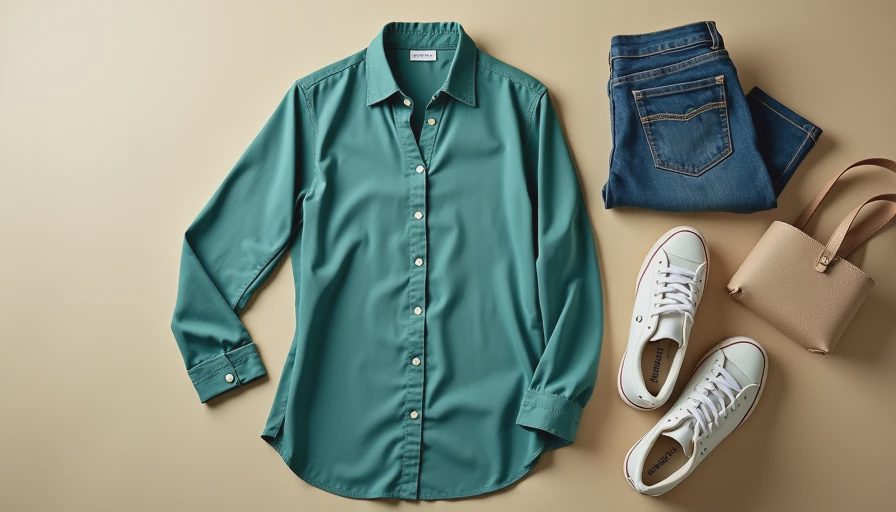
I like giving clients a short list of go-to formulas because decision fatigue is real. One formula is jeans, a tee, and a jacket. Another is straight pants, a knit top, and loafers or clean sneakers. A third is a midi skirt with a tucked-in sweater and ankle boots when the weather turns gray. A fourth is leggings, an oversized button-front shirt, and a structured coat or long cardigan for school drop-off days that run into errands. A fifth is a simple dress with a denim jacket and low block heels or sneakers when you need to look a little more finished without changing your whole life.
The trick is to make the formulas yours. If you never wear skirts, stop buying skirts. If you hate fussing with shoe changes, pick a pair of sneakers that looks clean enough to wear with pants and dresses. If you need pockets because your phone and keys have to live somewhere, buy clothes with pockets instead of pretending you will carry a purse every minute of the day. This is where everyday outfits for women get easier: once the formula is set, you are only swapping colors, not rebuilding the whole outfit from scratch.
Fix the fit before you blame the outfit
If your everyday outfits for women fail in the shoulders, waist, or hem, no amount of good taste will save them. Most bad outfits are fit problems dressed up as style problems. A shirt that gaps between buttons is not your fault; it needs a different size, a better cut, or a safety pin until you find the right one. Pants that pool at the ankle make even a good shoe look sloppy, and sleeves that stop halfway between wrist and hand make your arms look like they borrowed the shirt from a cousin.
A decent tailor can do more than people think. Hemming pants usually runs about $15 to $25 in many cities, and taking in a waist or shortening sleeves often lands in the $20 to $40 range. That is cheaper than buying three replacements you will not wear. In the dressing room, I used to ask women to sit, reach, and bend before they bought anything. If the shirt rode up, the waistband dug in, or the neckline needed constant tugging, back it went. Your closet should not require a pep talk.

Shop smarter so the closet does not keep draining your wallet
A lot of people overspend because they shop reactively. They see a sale, buy the item, then try to build a life around it. Better to start with what you wear three times a week and replace the weak links first. If your black pants are shiny at the knees, replace those. If your white tee is see-through, replace that. If your favorite cardigan has cuffs that are fraying, buy one new version before the old one is truly unwearable. That is how you spend $150 to $300 and feel the difference immediately.
When I work with clients, I tell them to shop with a short list: one top, one bottom, one layer, one shoe. If you are staring at a cart full of random pieces, stop and ask whether each item works with at least three things already in your closet. If it does not, it is probably a mood purchase. Nothing wrong with a mood purchase once in a while, but most closets do not need one more lonely blouse. They need dependable clothes that can handle Tuesday.
If you want everyday outfits for women that make getting dressed faster, start with pieces you can repeat, wash, and wear without thinking too hard. That is the real goal. Not perfection. Not a new image. Just clothes that make your morning easier and your reflection look like you made an effort, even when you were running late. Dressed for your real life.


No comments yet — be the first to share a thought.