If wearing the same outfit everyday is the only way you get out the door without losing your mind, I am not here to scold you. I have spent enough time in fitting rooms to know this: most women do not need more clothes, they need a repeatable plan. The goal is not to dress like a magazine spread. The goal is to look put together at school pickup, in a grocery store line, or under fluorescent lights at work, without spending twenty minutes arguing with your closet. A small uniform can do that better than a pile of maybe-bes.
When wearing the same outfit everyday is a smart move
I have seen wearing the same outfit everyday work for teachers, office workers, nurses on their off days, and moms who are tired of deciding between seven almost-identical tops. When the pieces fit, wash well, and stay comfortable, repetition stops looking lazy and starts looking practical. That is especially true if you are spending real money on clothes. A $68 pair of straight-leg pants worn 60 times is a better buy than a $29 pair that twists at the knee after three washes. Cost per wear is not fancy math. It is just common sense with a receipt attached.
The other benefit is mental energy. If you know your Monday outfit already works, you save yourself from the morning spiral of trying on three tops, a cardigan, and a pair of shoes that pinch. A repeatable outfit also makes laundry easier because you know what needs to come back clean first. That matters when the week gets messy. I have watched women spend more on random pieces in six months than they would have spent building one good base on purpose. And yes, a $24 tee from Uniqlo or Old Navy is fine if the neckline stays neat. A $78 pant from Talbots or Duluth Trading Co. is worth it if it does not twist when you chase a kid through a parking lot.
Build the uniform from the ground up
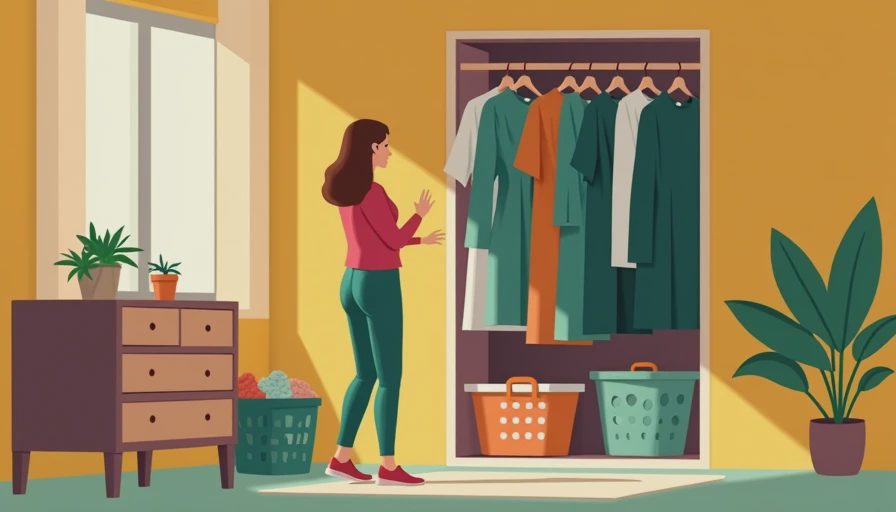
Start with the part closest to your body. If the tee pulls across the bust, rides up when you sit, or gets limp by lunchtime, the whole outfit looks tired. Good basics are not usually the cheapest rack in the store, but they also do not have to be expensive. A Lands' End Supima tee, an Everlane cotton tee, or a soft ribbed top from Old Navy can all work if the neckline holds shape. For pants, ponte, denim with a little stretch, or a straight ankle cut usually gives you more repeat mileage than a trendy silhouette that asks for special shoes.
Then pick a second layer you can wear almost year-round. A cardigan, denim jacket, blazer, or utility jacket gives you a way to change the mood without rebuilding the outfit. This is where a lot of women get stuck buying pieces that are cute on the hanger but useless on a Tuesday. If the sleeves are too tight to layer, the buttons pull, or the fabric wrinkles if you look at it wrong, skip it. You want clothes that survive sitting, driving, and a surprise dash into Target. Brands like Lands' End, Duluth Trading Co., Eddie Bauer, Talbots, and J.Crew Factory all make basics that can fit into a real-life rotation without acting precious.
The parts that give the game away
The fastest way for a repeat outfit to look worn out is fabric that looks tired before lunch. Thin white tees turn sheer. Black pants go shiny at the thigh. Sweaters pill under the arms and around the elbows. Shoes get scuffed at the toe and suddenly the whole thing reads as I gave up. That is why I tell people to buy one better shoe if they can. A $90 pair of loafers or ankle boots from Clarks, Naturalizer, or Easy Spirit can last much longer than the $35 pair that looks beat up in November.
Fit matters just as much. If the shoulders are off, the hem is too short, or the waistband cuts into you, you will feel it every time you move. That discomfort shows up on your face before it shows up in a mirror. A simple outfit should feel almost boring to wear in the best way. You put it on, you stop thinking about it, and you go live your life. If the same pants tug when you sit in the car or the sweater rides up when you reach for a cereal box, that is not a uniform. That is a nuisance with good intentions.
Keep it from feeling stale
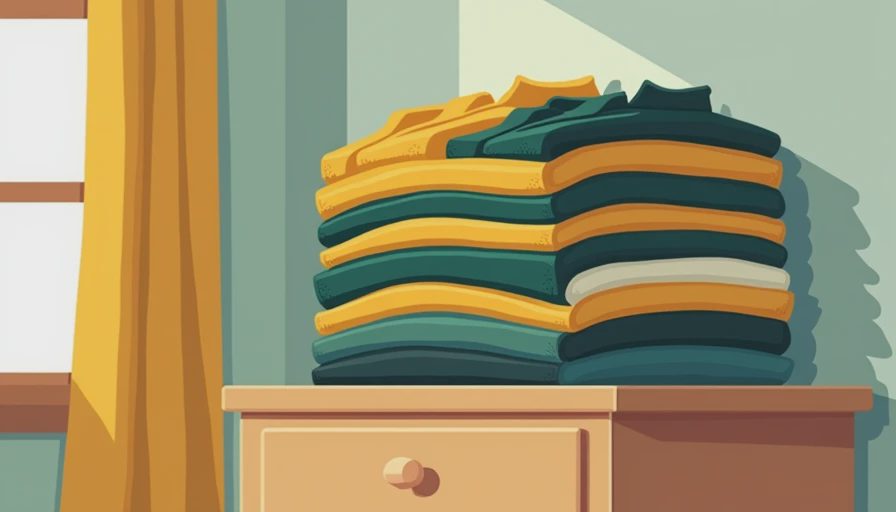
If you like repetition but hate boredom, vary the details around the base. Swap loafers for clean sneakers. Add a long pendant one day and small hoops the next. Try a belt when you need shape, or a scarf when you want a little color near your face. In colder weather, a wool coat or a puffer can make the same underlayers feel different enough to keep your own eye interested. That is the nice part of a uniform: you are not starting from scratch, so small changes actually matter.
You can also duplicate the winners. I am a big fan of buying two of the same black pants when one pair fits beautifully. Same with the tee that sits right at the collarbone or the cardigan that never clings. That is not boring. That is smart shopping. Women get trapped buying variety when what they really need is reliability. If your uniform is black pants, a cream top, and tan shoes, owning two nearly identical versions can save a lot of weekday stress and a few emergency Amazon orders. If you have one version in the wash and one hanging in the closet, you will stop reaching for backup clothes that never quite work.
A dressing room story I still think about
A woman came in once with a job that had her moving between a desk, a car, and a school gym. She was wearing the same general look almost every day already: dark pants, a soft top, and a cardigan. She felt embarrassed about it because somebody had told her she was dressing too much like a uniform. What she really had was the beginning of a system that needed better fabric and a better fit. We replaced the clingy knit with a heavier tee, found pants that did not bag out at the knees, and added a second cardigan so she could rotate laundry without panic.
She spent about $240 and stopped buying random tops that she never wore. She did not buy a whole new wardrobe. She bought the same shape in better fabrics. Two months later she told me she felt calmer getting dressed because she had fewer decisions to make and fewer clothes to second-guess. That is the part people miss. A repeat outfit is not about looking identical. It is about removing the little daily friction that wears you down.
Before you call it a uniform, do this
Ask yourself whether the outfit works in three places: sitting at a desk, getting in and out of a car, and walking into a store on a cold day. If it passes those tests, you are probably onto something. Then check the fabric after laundry day. Does it dry fast enough? Does it need ironing? Does it hold its shape after you wear it for a full day? Finally, make sure you can replace the pieces without starting over from zero. If the look depends on one impossible-to-find top, it is not really a system.
If wearing the same outfit everyday is what gets you out the door with less stress, I say lean into it and make it better. Build it on good fabric, honest fit, and a price tag that makes sense. That is dressed for your real life.
Dressed for your real life.


No comments yet — be the first to share a thought.