I spent eight years watching women stand in front of a three-way mirror, tugging at hems and talking themselves out of buying the thing that actually solved their problem. The truth is that casual everyday outfits do not need a closet overhaul. They need a few dependable pieces, a better fit, and enough structure that you can get dressed before the coffee gets cold. If you are living real life in the Midwest, that means school drop-off, office hours, grocery runs, muddy sidewalks, and the occasional dinner where nobody has time to change. The goal is simple: look put together, feel comfortable, and spend your money where it lasts.
Start with casual everyday outfits built from three reliable pieces
The easiest way to build casual everyday outfits is to stop thinking in terms of single items and start thinking in terms of a formula. I tell women to build from the middle of the closet first: one top, one bottom, one layer. That usually means a solid tee or knit top, straight-leg jeans or relaxed trousers, and a cardigan, denim jacket, or utility shirt. When those three pieces play nicely together, you can add shoes and a bag and be done.
Fabric matters here more than most people want to admit. A $14 tee that goes limp after one wash is not really cheaper than a $28 one that keeps its shape. I like cotton-modal blends, thicker jersey, and sweaters that are soft without being flimsy. For jeans, look for a mid-rise or high-rise with enough structure to hold the line of the waistband. If you are constantly yanking at your clothes, the outfit is using up your energy. That is not a style problem. That is a fit problem.
The nice part is that this kind of formula works across budgets. You can build a very usable wardrobe with a few Target, Old Navy, Levi's, or Lands' End pieces and still look intentional. You do not need a giant stack of options. You need pieces that earn their drawer space.
Fit is the difference between easy and fussy
In the dressing room, I saw this every day: a woman would blame her body for an outfit that was really just badly cut. Shoulder seams too wide. A blouse that pulled across the bust. Pants that looked fine standing still and then bagged out at the knees after twenty minutes. Good casual everyday outfits start with the boring questions. Does the shoulder hit where your shoulder actually is? Can you sit down without the waistband digging in? Does the sleeve end where it should, or is it swallowing your hand like you borrowed it from a taller cousin?
A quick fix is often cheaper than replacing half your closet. A $12 hemming job can turn pants from awkward to wearable. A tailor can usually take in a waist for less than the cost of another impulse buy. I have watched women spend $80 on a second pair of jeans because they were annoyed with the first pair, when a $15 alteration would have solved the whole thing. That is money you can feel in your wallet.
You also want to pay attention to drape. Stiff fabric can look sharp, but if it stands away from the body in all the wrong places, it reads clunky. Too-thin knit, on the other hand, tends to cling and stretch out in a day. The sweet spot is fabric with enough body to skim, not squeeze.
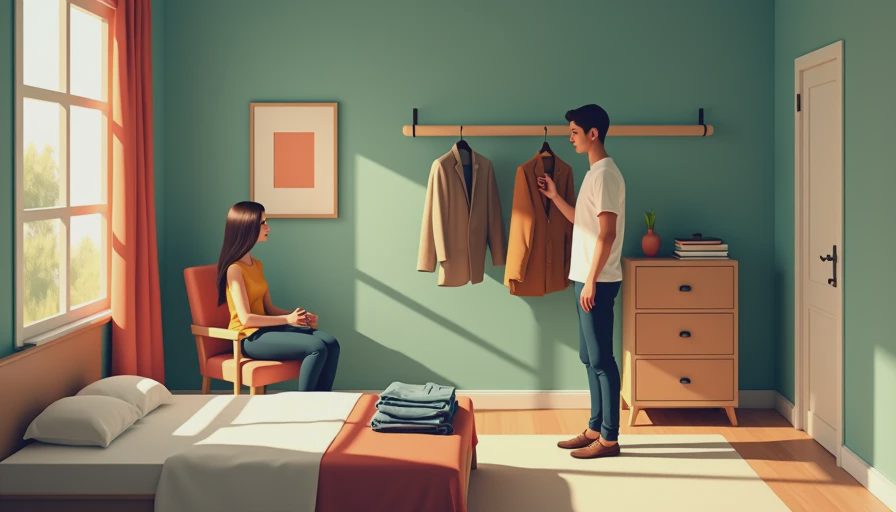
Three casual everyday outfits you can repeat without looking repetitive
The first outfit formula is jeans, tee, and a third piece. I like this because it handles real life better than most polished looks. Try dark straight-leg jeans, a white or heather gray tee, and a navy cardigan. Add white sneakers if you are doing errands, or loafers if you need to look a little sharper for work. If your tee is good quality and the jeans fit well, nobody is thinking about how basic it is. They are thinking you look settled in your own skin.
The second formula is relaxed trousers and a knit top. This is the quiet hero for women who want comfort without defaulting to leggings every day. A pull-on trouser in black, olive, or charcoal can feel as easy as sweatpants if the rise is right and the fabric has enough weight. Pair it with a ribbed short-sleeve sweater, a tucked-in tee, or a split-neck blouse. I have seen this formula work for teachers, office workers, and women who are done pretending they need a different outfit for every errand.
The third formula is a shirt dress or midi skirt with simple sneakers. This one sounds dressier than it is, but a cotton poplin shirt dress or a knit midi skirt can be as practical as jeans when the weather cooperates. The trick is keeping the shoes grounded. A clean sneaker or flat sandal makes the outfit feel lived-in instead of precious.
Shop the middle-price rack, not the panic buys
People love to blame the budget, but what usually hurts is shopping in a hurry. The ten-minute Amazon cart, the late-night sale tab, the last-minute add-on because you had nothing for Saturday brunch. That is how closets fill up with almost-right clothes. Better to buy fewer pieces with a job description.
If you are spending $25 to $40 on a top, it should work with at least three bottoms you already own. If you are spending $60 to $100 on jeans, they should be the pair you reach for twice a week, not once a month. If a jacket costs $70 and goes with everything, the cost per wear drops fast. Ten wears puts it at $7 a wear. Twenty wears gets you to $3.50. That math matters more than the tag on the hanger.
This is where brands like Gap, J.Crew Factory, Duluth Trading, and Eddie Bauer can make sense for a Midwestern closet. They are not magic, and they are not all winners, but they often offer sturdier basics than the cheapest rack. I would rather see someone buy one navy cardigan that survives the dryer than three flimsy ones that pill by Thanksgiving.
When your closet is crowded, simplify casual everyday outfits
Most women do not need more clothes. They need fewer decisions. When a closet is jammed with tops that itch, pants that slip, and sweaters that only work in theory, the brain goes straight to leggings and a sweatshirt because it is tired. That is how you end up feeling underdressed while standing in front of a full rod of clothes.
The fix is to keep a short list of what actually works and repeat it on purpose. Maybe your best version is straight jeans, a striped tee, a long cardigan, and sneakers. Maybe it is black pull-on pants, a soft blouse, and loafers. Maybe it is joggers that are polished enough to leave the house in, not gym pants pretending to be clothes. Once you know your dependable formulas, casual everyday outfits stop feeling like a daily puzzle and start feeling like a uniform that fits your life.
I have watched women come back after a closet edit and say the same thing: I still own plenty, but now I wear more of it. That is the goal. Not a fantasy wardrobe. A real one. Dressed for your real life.


No comments yet — be the first to share a thought.