I have stood in enough fitting rooms to know this: most women do not need a brand-new wardrobe, they need a system that makes everyday outfits easier at 7:15 a.m. when somebody missed the bus, the coffee is still too hot, and you have exactly one clean bra you actually like. The goal is not to look styled for a magazine shoot. The goal is to look like you meant to get dressed, even if you got dressed while answering a text and hunting for a lunchbox.
The best everyday outfits usually start with three things: fit that stays put, fabric that does not fight back, and a shape you can repeat without getting bored. That is the part fashion advice skips over. They tell you to “elevate” things. I tell you to buy the pants that do not slide down, the tee that does not twist after one wash, and the cardigan you do not have to keep yanking into place.
Start with a simple uniform, then make it yours
For everyday outfits, I like a small uniform better than a crowded closet. A lot of women I work with feel relieved when I give them permission to stop chasing variety for its own sake. If you know you wear straight-leg jeans, ankle pants, and midi skirts all the time, that is not boring. That is useful information. Build there.
I once had a client in Des Moines who owned 14 tops and only two bottoms she felt good in. No wonder she felt stuck. We changed the math, not her whole personality. She bought two pairs of jeans in dark washes, one pair of black ankle pants, and four tops in cotton, modal, and lightweight knits. Suddenly she had more working outfits than she could make use of. That is how everyday outfits stop being a guessing game.
The fit details matter more than the label. A shoulder seam that lands right, a waistband that sits flat, and sleeves that do not bunch can make a $38 top look sharper than a $98 one that pulls at the chest. Try clothes on with the shoes you wear most. If you live in New Balance sneakers, a low block heel, or leather loafers, test those right away. The mirror tells the truth when the whole outfit is together.
Build outfits around fabric, not just color
This is where shopping gets smarter. Color gets all the attention, but fabric is what decides whether clothes behave after lunch, school pickup, and a seatbelt. Cotton tees are fine, but a cotton tee with a little modal or spandex usually drapes better and wrinkles less. Ponte pants beat flimsy knit pants because they hold shape. A cardigan in a dense knit lasts longer than one that feels like it came off a clearance rack already tired.
If you want everyday outfits that work hard, keep an eye on weight and stretch. A good denim shirt can run $50 to $90 and wear beautifully for years. A decent sweater from Lands’ End, Talbots, J.Crew Factory, or Old Navy might cost $35 to $80, depending on the knit. That is not about chasing a logo. It is about buying something with enough structure to survive regular life.
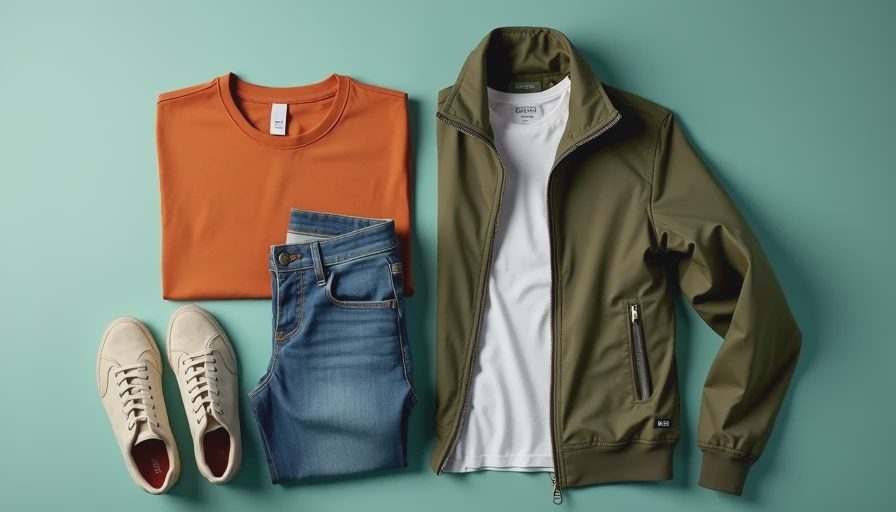
I also like finishing a look with one third piece: a cardigan, blazer, denim jacket, utility jacket, or longline vest. It gives the outfit a point of view without making you feel dressed up for no reason. If you are carrying a tote bag, chasing kids, or walking into a school meeting, that extra layer helps the whole thing feel finished.
Where to spend and where to save
The nicest everyday outfits usually come from spending more on the pieces that take the most abuse. Shoes are first on my list. If you wear them five days a week, it is worth paying $70 to $130 for a pair that does not chew up your feet by noon. Pants are next. A good pair of jeans, straight-leg trousers, or ponte pants at $60 to $120 can save you money because you will actually wear them.
Save on simple tops, seasonal colors, and layering pieces you do not expect to keep forever. A $24 tee that lasts a year is fine if it fills a gap. A $68 cardigan worn 40 times is a better buy than a $28 one you hate after the second wash. That is cost-per-wear math, and it is the least glamorous but most honest thing in the closet.
The nicest everyday outfits often look expensive because they are not fighting themselves. The hem hits where it should. The sleeves are the right length. The shoes are clean. The bag is not overstuffed with receipts. That is not luck. That is editing.
Five outfit formulas that do not waste your morning
Think of outfit formulas as shortcuts for tired brains. One easy version is dark jeans, a white tee, and a navy blazer. Another is black ankle pants, a striped knit, and loafers. A third is a midi skirt, a tucked-in sweater, and low-profile sneakers. You can wear all three in a week without feeling like you repeated yourself, because the silhouette does the work.
For school drop-off, I like leggings only if they are thick enough to hold their shape and paired with a longer top that covers what you want covered. For the office, try straight pants, a shell, and a cardigan in a better knit. For errands, a knit dress with sneakers is easy if the dress skims instead of clings. For dinner, swap the sneakers for ankle boots and add earrings. Same woman. Different message.
The point is not to build a closet full of “special” clothes. The point is to have a few formulas you trust. When a client tells me she wants everyday outfits that work for work, weekends, and everything in between, I usually say the same thing: stop buying single-use clothes and start buying repeatable combinations.

Clean out the pieces that make dressing harder
When everyday outfits start feeling expensive, it is often because the closet is full of near-misses. Shirts that gape at the chest. Jeans that fit in the store but sag by lunch. Cardigans with stretched cuffs. Shoes that pinch but were “a good deal.” Those pieces cost money every time you avoid them.
Pull out anything you adjust all day long. Then be blunt. If a hem needs tailoring and the fabric was cheap to begin with, pass. If a blouse only works with one bra you rarely wear, pass. If the item makes you sigh before you even put it on, that is your answer. A closet full of maybes is not a wardrobe.
My quickest reset advice is to keep only the pieces that can make at least three outfits right now. Three is the magic number. If a sweater works with jeans, black pants, and a skirt, it earns space. If a pair of pants only works with one top and one specific shoe, it is a weak link. Everyday outfits get easier when every piece has a job.
The part nobody says out loud
Most women do not need more inspiration. They need less friction. They need pants that close without a wrestling match, tops that wash well, and shoes they can stand in while waiting for the school doors to open. That is why I keep coming back to simple shapes and sturdy fabric. They are not exciting on the rack, but they are excellent on a Tuesday.
If your everyday outfits already make you feel like yourself, keep going. If they do not, start with one better pair of pants, one dependable top, and one shoe you can walk in. Build from there, and stop apologizing for liking what works. Dressed for your real life.

No comments yet — be the first to share a thought.