If you’ve ever bought a $25 sweater that sat in your closet while a $90 cardigan became your weekly uniform, you already understand the question behind cost per wear meaning. The price tag is only the beginning. What matters is how much each actual wearing costs you over time.
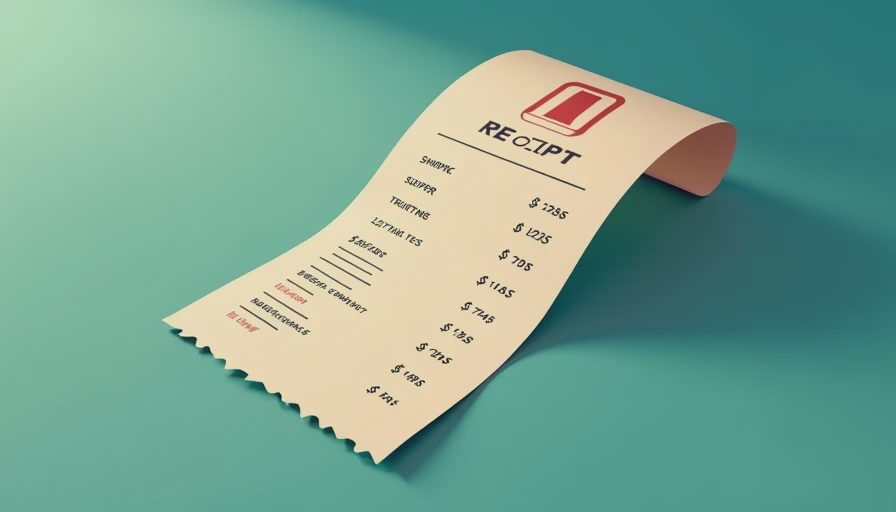
I’ve used this math with hundreds of women in dressing rooms, including plenty who arrived convinced that a low price automatically meant a smart purchase. It doesn’t. A $20 blouse worn once costs $20 per wear. A $100 pair of pants worn 25 times costs $4 per wear. That second item is doing much more work for your money.
Cost per wear meaning in plain English
The formula is simple: divide the purchase price by the number of times you wear the item. If you spend $72 on a washable work dress and wear it 18 times, the cost is $4 per wear. If you buy a $38 novelty top for one birthday dinner, the cost is $38 per wear, even though the checkout total looked modest.
That calculation gives you a more honest view of value. It also explains why “cheap” and “expensive” aren’t useful categories by themselves. A $12 clearance shirt can be a bargain if it works under blazers, survives the laundry, and comes out of the closet twice a week. It can be a waste if the neckline bothers you, the fabric pills after two washes, or you never find the right bra for it.
Cost per wear meaning becomes especially useful when you compare two similar purchases. Imagine a $45 pair of jeans that you tolerate and a $95 pair that fits at the waist, stays comfortable in the car, and works with six tops. The first pair might be worn three times before being pushed aside. The second could reach 40 wears. That is $15 per wear versus $2.38 per wear.

Why the lowest price often loses
In my old Von Maur dressing room, I saw this happen constantly. A woman would hold up a $29 blazer and say, “This is probably the sensible one.” Then she’d try it on and tug at the sleeves, pull the front closed, and frown at the lining. The $79 blazer beside it sat smoothly across her shoulders and worked with the pants she already owned. The cheaper jacket wasn’t a deal. It was an unfinished purchase.
When calculating cost per wear meaning, include the reasons you might stop wearing something. Scratchy wool, buttons that gap, dry-cleaning requirements, see-through fabric, and a hem that needs immediate tailoring all add friction. You don’t have to enter every possible expense into a spreadsheet, but you do need to be honest about your habits.
A $60 skirt that requires a $25 alteration starts at $85. That can still be excellent value if you wear it weekly. A $35 skirt that wrinkles during your 20-minute commute may never make it out the door. Your closet is full of clothing you can technically wear. The useful question is whether you will choose it on a rushed Tuesday morning.
How to calculate it before you buy
Start with the realistic number of wears, not your optimistic fantasy. Ask where you will wear the item, which shoes will work, whether the weather cooperates, and how often you do laundry. A sleeveless linen dress might get eight summer wears in Des Moines, not the 30 wears you imagine while standing under bright store lights.
Next, check whether the item has at least three complete outfit partners already in your closet. A $50 cardigan that works with black trousers, jeans, and a printed skirt has a strong path to 20 wears. A $50 pair of bright pants that needs a special top, special shoes, and a very specific mood has a much steeper climb.
Then estimate maintenance. Machine washing is easier than dry cleaning, but delicate fabric is not automatically better. Look at the care label, feel the seams, and inspect the fabric under normal light. I also recommend sitting, reaching, and walking in the fitting room. Clothes earn a low cost per wear only when they work in motion.
A few real-life wardrobe examples
Consider a $24 cotton T-shirt worn 12 times. Its cost is $2 per wear, and it may become a strong basic if the neckline holds its shape. A $140 wool coat worn for five winters at 20 wears per season reaches 100 wears, or $1.40 per wear. That is why durable outerwear can deserve more budget than a special-occasion blouse.
Now consider a $68 holiday sweater worn twice. It costs $34 per wear. That doesn’t automatically make it a bad purchase; joy counts, and some clothes are meant for a particular event. But you should buy it because the two evenings are worth $68, not because a mental calculation is going to rescue an impulse purchase.
A $110 handbag used 150 times costs about 73 cents per wear. If it holds your wallet, phone, reading glasses, and the granola bar your child forgot in the car, it may be one of the hardest-working items you own. The number becomes useful when it reflects your real life rather than a fantasy version of it.
What cost per wear leaves out
Cost per wear meaning is helpful, but it isn’t a command to wear every garment until it falls apart. Clothing can have emotional value, comfort value, and practical value that a division problem cannot capture. A red dress you wear to your sister’s anniversary dinner may be worthwhile even if it never reaches ten wears.
The math also doesn’t account for regret. If an item makes you feel awkward every time you put it on, a low number won’t make it useful. Donate or resell it rather than keeping it as evidence that you once spent money. The sunk cost already happened; storing the garment won’t refund you.
For me, cost per wear meaning works best as a pause button. It gives you a moment to ask whether this purchase belongs in your actual week. It should support your decisions, not scold you for wanting a beautiful color or a little fun.
A practical checkout test
Before paying, write down the price and a conservative wear estimate. If the $84 pants will realistically get 28 wears, you’re looking at $3 per wear. Decide whether that number feels fair for the comfort, fabric, fit, and number of outfits available now.
If you cannot name three places you’ll wear the item, put it back for 24 hours. If you need to buy another $60 top and $90 shoes to make it usable, calculate the whole outfit, not just the first price tag. If the garment needs tailoring, add that cost. And if the only reason you want it is that it is marked down from $140, remember that a discount does not create a need.
The best wardrobe usually contains a mix: inexpensive basics, hardworking mid-priced pieces, and a few higher-cost items that earn their space through frequent use. After applying cost per wear meaning, you may still choose the $68 sweater. The difference is that you’ll know why.
Dressed for your real life.


No comments yet — be the first to share a thought.