Stylish but affordable workwear doesn’t require a closet full of matching suits or a morning free for complicated outfit changes. I’ve helped hundreds of women get dressed for offices, classrooms, clinics, courtrooms, and hybrid workdays, and the same truth comes up every time: the right fabric and fit matter more than a fashionable label. You need clothes that can survive a commute, a coffee spill, a school pickup, and an unexpected meeting without making you feel like somebody else.
Start with a small workwear foundation
The easiest way to build stylish but affordable workwear is to begin with five dependable pieces rather than buying a complete wardrobe in one afternoon. Choose one pair of straight-leg or gently wide-leg trousers, one pair of dark ankle pants, a washable knit top, a button-front shirt, and a simple jacket or cardigan. In practical colors such as navy, charcoal, camel, ivory, and dark olive, those pieces can create more combinations than a rack of single-use outfits.
For prices, I’d aim for roughly $35 to $70 for pants, $20 to $45 for tops, and $50 to $100 for a jacket. Stores such as Target, Old Navy, JCPenney, Kohls, and Lands’ End frequently offer useful basics in that range, while consignment shops can turn a $90 budget into several better-fabric pieces. The goal isn’t the lowest sticker price. A $45 pair of pants worn twice a week for six months costs less per wear than a $22 pair that twists at the knee after three washes.
When I worked in the Von Maur fitting rooms, women often reached for a dramatic blouse first. I usually started them with pants. If the waistband sits comfortably, the rise doesn’t pull, and the hem works with your usual shoes, the rest of the outfit becomes much easier to judge.

Fit details that make inexpensive clothes look considered
Stylish but affordable workwear depends on small fit decisions that cost nothing. A sleeve ending at the wrist bone looks intentional; one covering half your hand usually looks accidental. A trouser hem should either skim the top of your shoe or stop cleanly above the ankle. If you wear loafers most days, bring them into the fitting room. A hem tested with sneakers can look completely different with a low block heel.
Pay attention to fabric recovery, too. Sit down in the pants. Reach forward. Twist to grab your purse from the passenger seat. Polyester blends with a little stretch often handle a workday better than thin, stiff fabric, but too much stretch can create shiny knees. For tops, look for cotton blends, rayon challis, ponte, or washable crepe. Hold the fabric toward the fitting-room light to check whether the front buttons, pockets, or seams become see-through.
Here’s the honest dressing-room test I use: stand normally, then raise both arms. If the shirt climbs several inches, it isn’t a work shirt for your real life. If the jacket pulls across the back when you reach for a file or hug a child, size up and adjust the sleeve or shoulder later if necessary. A comfortable garment gets worn. A perfect-looking garment that pinches stays on the hanger.
Build outfits around one reliable third piece
A third piece is the item added after a top and bottom: a cardigan, jacket, vest, sweater blazer, or polished overshirt. It gives stylish but affordable workwear structure without requiring a suit. A $65 knit blazer over a $25 shell and $45 pants can look more finished than a $140 dress that needs special undergarments and careful shoes.
For Midwestern weather, I like a medium-weight cardigan with actual buttons, a collarless knit jacket, and one unlined blazer. These layer over a sleeveless shell in August and a turtleneck in January. Look for jackets that finish around the hip or slightly below it, depending on what feels comfortable with your pants. Very cropped jackets can make a longer top bunch underneath, while a very long cardigan may overwhelm a narrow trouser leg.
Keep one easy outfit formula ready for mornings when everything goes wrong: dark pants, a solid top, a third piece, and comfortable shoes. Add one pair of small earrings or a watch if you wear jewelry. That is enough. You don’t need a statement necklace, scarf, belt, and patterned shoe all competing for attention before 8 a.m.
Spend more where your body notices first
Stylish but affordable workwear doesn’t mean every item should cost the same. Put more of the budget toward pants, bras, shoes, and outer layers because those pieces affect comfort and posture throughout the day. Save on simple shells, camisoles, seasonal color, and trend-sensitive prints that you might wear less often.
A practical $300 starter budget could look like this: $90 for a dependable pair of trousers, $65 for ankle pants, $45 for a knit jacket, $35 for a button-front shirt, $30 for a washable shell, and $35 for a belt or simple flats. That is not a full closet, but it creates several outfits immediately. Add a second top and cardigan during the next pay period rather than putting the entire purchase on a credit card.
Cost-per-wear keeps the decision grounded. If a $78 pair of pants gets worn 40 times, that’s $1.95 per wear before cleaning. A $28 blouse worn twice is $14 per wear. I’m not saying the expensive item automatically wins; I’m saying repeated use is part of the price tag. Before buying, ask where you’ll wear it, what shoes work with it, and whether it can go in your regular laundry.
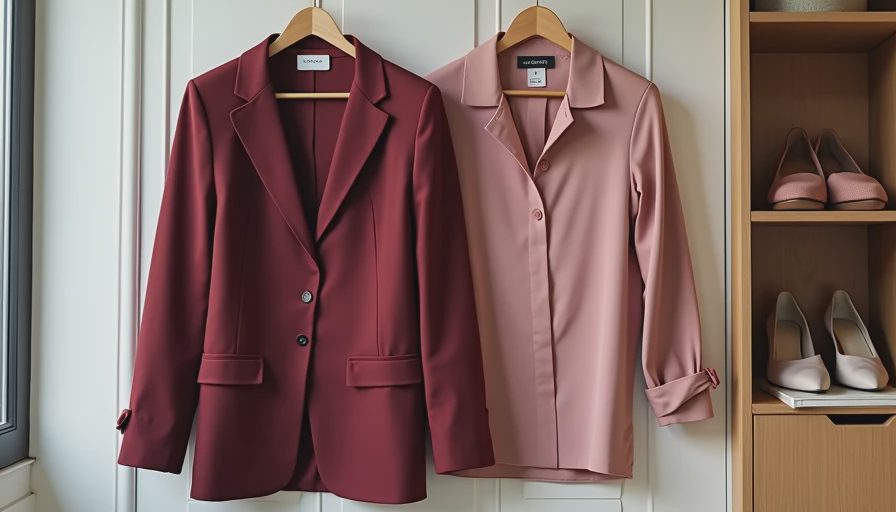
Shop your closet before shopping online
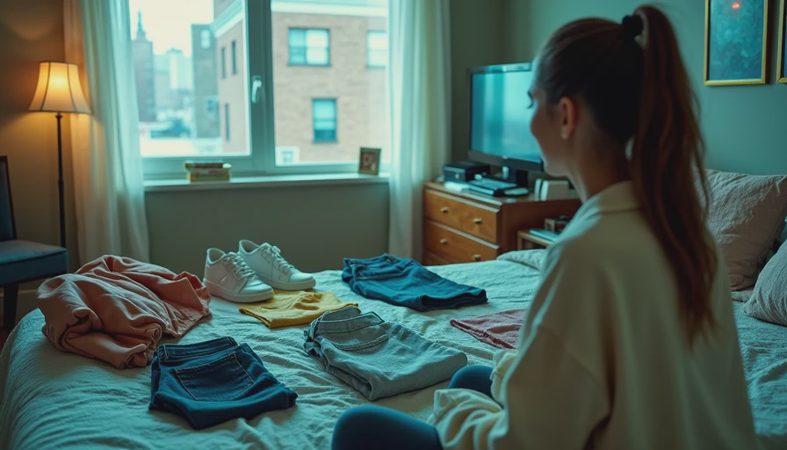
Before ordering another blouse, pull out every pair of work pants and try them on with the shoes you actually wear. Put the uncomfortable ones in a separate pile. Check whether the problem is the waistband, seat, rise, length, or fabric. “I don’t like these” is less useful than “the waistband rolls when I sit.” That detail tells you what to avoid next time.
Now photograph three outfits on your phone. Not for social media. Just for the 7 a.m. version of you who cannot remember whether navy works with brown shoes. Include a casual meeting outfit, a more formal presentation outfit, and a bad-weather outfit with practical layers. If an item doesn’t appear in any combination, it may be an orphan piece, even if it looked exciting in the store.
This is also where thrift and consignment shopping work best. Go in with a list: black or navy pants, washable shell, cardigan, belt, or comfortable loafers. Check the underarms, seat, hem, zipper, and lining. A $16 secondhand jacket with clean seams can be a smarter purchase than a $55 new jacket made from flimsy fabric.
A five-minute morning plan
Stylish but affordable workwear becomes easier when the closet supports a routine. On Sunday evening, choose two complete outfits and one backup. Hang each outfit together, including shoes and a layer. Keep a stain pen, lint roller, and small sewing kit in a drawer near the door. These tiny preparations prevent the frantic decision to buy lunch, coffee, and a new top because you spilled something before leaving home.
On a rushed morning, use this order: choose the bottom first, check the weather, add a top, add a third piece, then select shoes you can walk in for ten minutes. Look in a full-length mirror while standing and sitting. If you’re tugging, adjusting, or holding your breath, change the garment. Clothes should support your day, not become another task on your list.
The best stylish but affordable workwear is the outfit you can wear to a meeting, bend down to pick up a dropped pencil, and still recognize yourself in the mirror afterward. Buy fewer pieces, inspect the fabric, and spend your money where comfort earns its keep. Dressed for your real life.

No comments yet — be the first to share a thought.